
Bulldozer is one of the largest B2B-focused marketing agencies in Europe. Until recently, they had kept their creative arm small because of the ops complexity to operate it at scale. With AI, they saw an opportunity to completely change the rules of the game.
Now they use Pletor as their infrastructure to scale ads production across hundreds of clients.
Situation
For years, Bulldozer operated like most agencies. A typical engagement meant selling a pack of ten creatives. The process was structured and controlled: validate value propositions, validate angles, validate visual directions, then produce final assets.It worked but it was slow and undifferentiated.
When AI image and video models emerged, the Bulldozer team quickly identified the opportunity: turn this operational burden into an asset. Remove the technical barrier to production. Focus on their team strengths, creative strategy and ads expertise.
Content factory was the future but they quickly realized they would need a proper infrastructure to set this up across hundreds of teams.
Problem
When it became obvious AI would be a game changer for production, Enguerrand, Bulldozer founder and co-CEO, immediately understood the challenge was elsewhere: how do we scale?
The bottleneck wasn’t AI capability. It was structure and adoption among teams.
One option was to take 5-10 different subscriptions to the best models (Kling, Nano Banana, Seedance…) but it would have quickly turned into an operational nightmare:
- Impossible access management at their team size, especially as new state-of-the-art models pop up every month
- Complex onboarding. Every newcomer should receive an “how-to” process for each creative need explaining the prompt to use, the model to use, etc. This would have been a full-time knowledge management role.
- Slow operations if every step of the process is manual. Bulldozer couldn’t reach their scale objectives if creative strategists and designers hop from one platform to another every time they create an asset.
Solution
With Pletor, Bulldozer organized their production workflows around repeatable, centralized and customizable creative systems.
Their central Creative team led by Bertrand analyzes top performing creatives formats and build the right creative systems to scale each format (before-after static, hyper-targeted UGC…).
This operating model fits exactly how they create value for clients:
- Deployment phase: Adjust the creative systems to the client needs by integrating brand guidelines, value proposition, etc.
- Execution phase: Bulldozer designers and creative strategists operate the client-specific systems. They simply provide instructions and get multiple proven ad creatives in one pass.
Bulldozer operating model makes the most from the human x AI combination. Designers no longer reinvent trending formats independently. They adapt, iterate, and test all from a shared library of systems.
Production is not a bottleneck anymore. New creative iterations are tested constantly. And with Meta Andromeda, ad performance increases signficantly.
Impact
Rethinking creative testing
Instead of betting on one asset, Bulldozer runs a portfolio of creatives that are constantly tested and improved.
Ten hooks instead of one. Multiple personas instead of a single demographic. Broader audience coverage instead of narrow targeting. The learning surface is drastically improved and performance follows.
The impact is particularly strong for video ads. Where a single traditional UGC video might cost roughly €400, AI-assisted workflows allow Bulldozer to produce up to 10–15 variants within a similar budget range. That includes different actors, demographics, hooks, and tonal variations.
Top performers can even be replicated with human actors that tend to overperform on identifical scripts.
A new validation model
Bulldozer also rethought how clients review work.
Rather than sending one or two highly polished creatives, they deliver curated batches. Clients review the outputs directly and remove what doesn’t meet their standards. Feedback focuses on patterns rather than pixel-level corrections.
The mindset shift is significant. You trade microscopic control for macro-level performance gains.
New business model
Bulldozer can now scale a creative arm without increasing headcount. What used to be an operational burden has become a profitable and fast-growing business unit.
Their clients see their performance grow as they test more dimensions at once (format, angle, value proposition, and persona) which shortens the time required to identify winning combinations.
Use cases
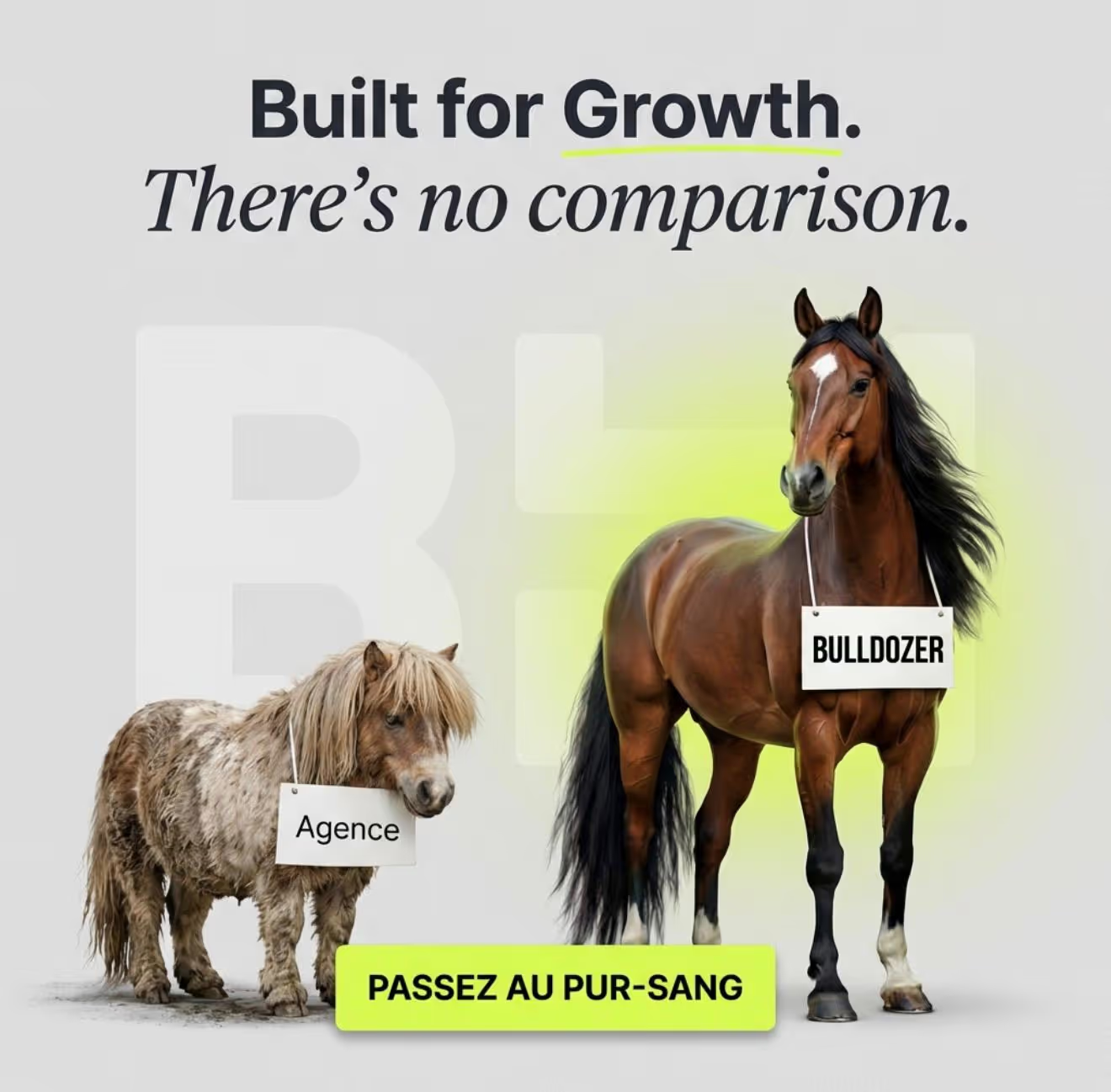
Examples of assets produced for Bulldozer own acquisition:


Ferdinand Terme
Founder & CEO @Pletor

Build your creative system.
Start free. Scale when you're ready.