Introduction
GPT Image 2 is a strong all-around model and a serious competitor to Nano Banana 2 and Nano Banana Pro. It handles text more reliably than most, produces good art direction with limited guidance, and works well across a wider range of use cases than you might expect: UGC photos, static ads, product shots, structured layouts, UI mockups. It is not a specialist model, it is a generalist that is genuinely good at most things marketing teams actually produce.
The main caveats going in: it is roughly twice as slow as Nano Banana models and noticeably more expensive per generation. Content moderation is also stricter, which makes it unusable in some industries (e.g., underwear).
This guide covers where it performs well, where Nano Banana models are still the better choice, and a few model-specific features worth knowing about.
Top use cases
Editorial photos
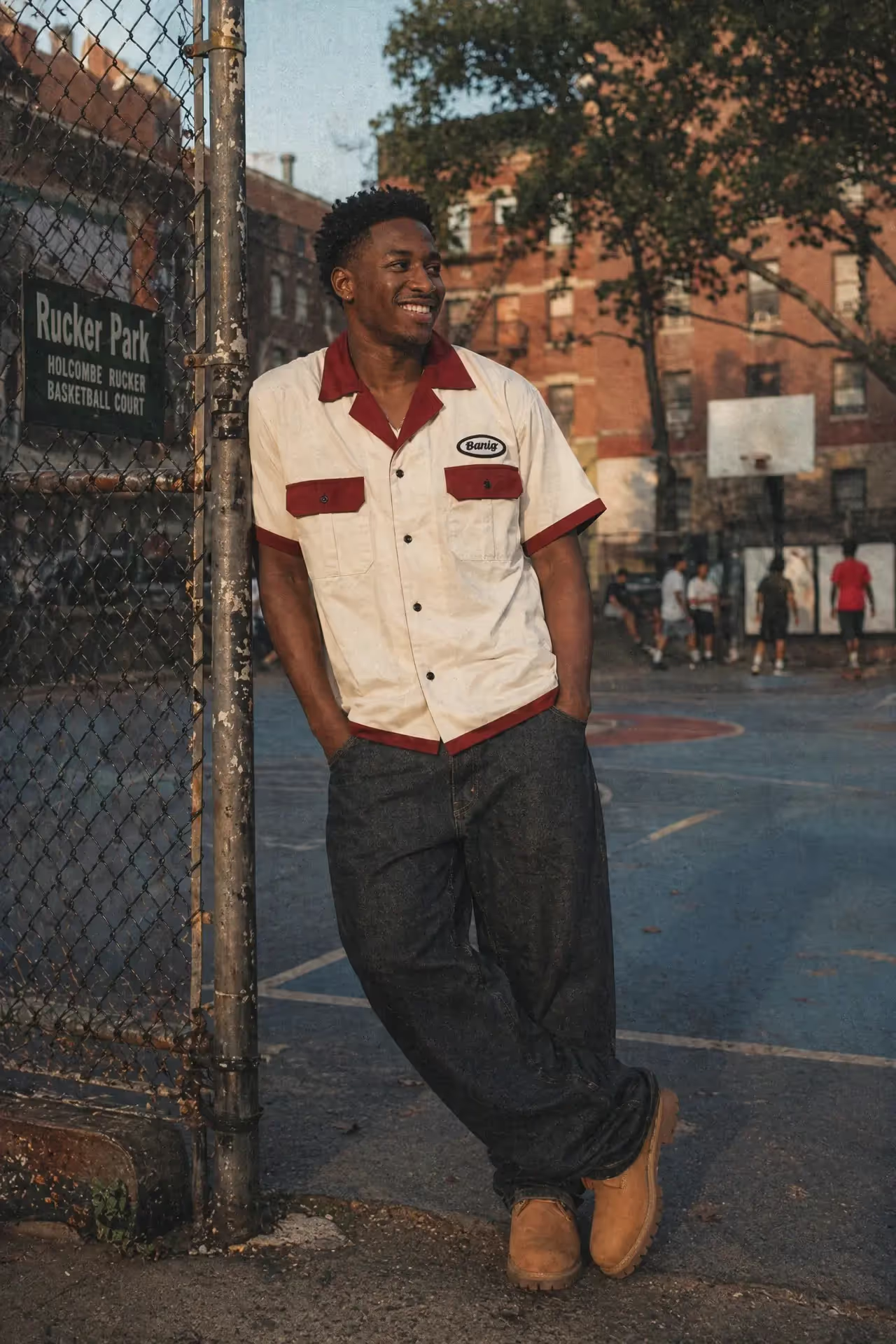
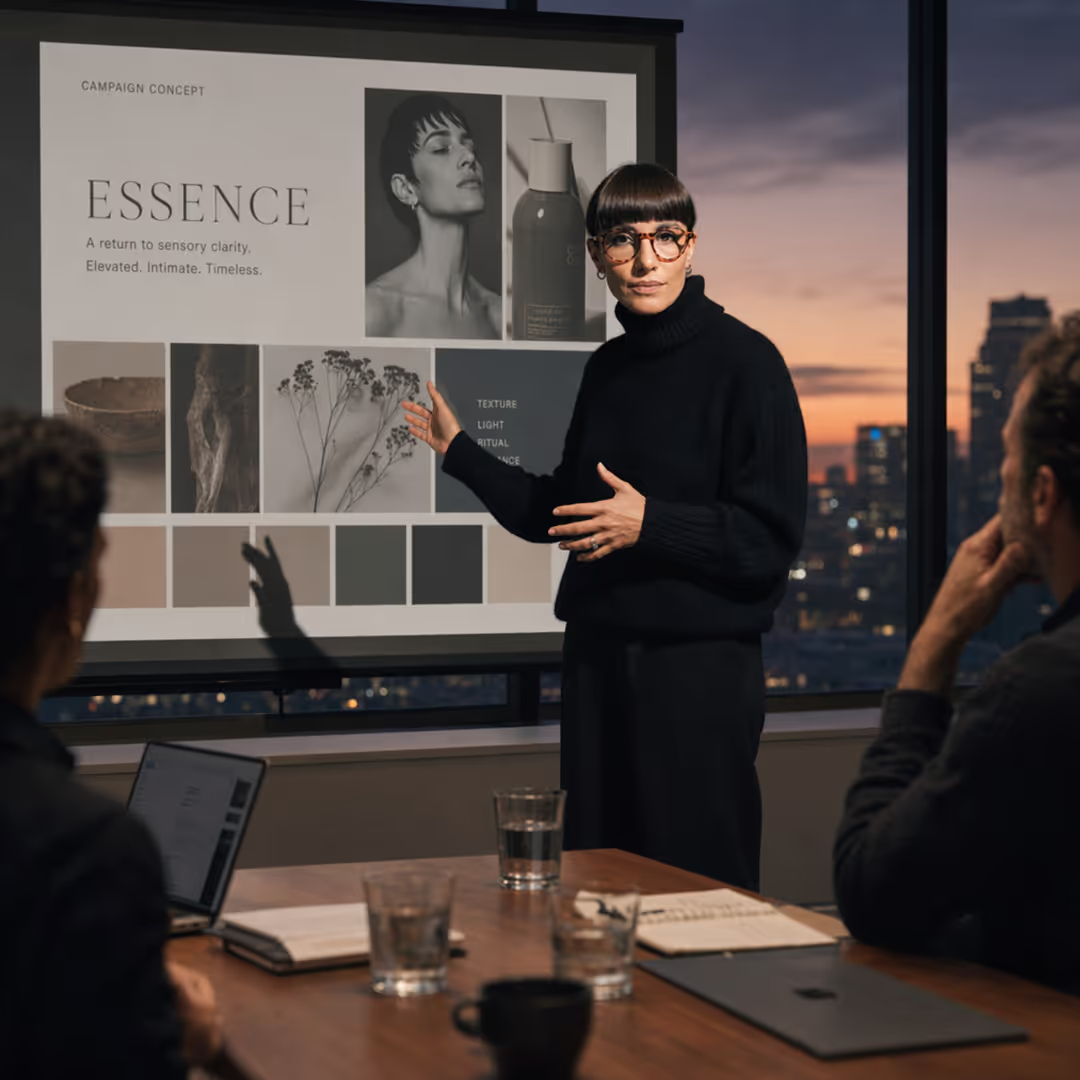
GPT Image 2 has solid art direction and avoids the over-polished look that marks a lot of AI editorial output. On this type of content, it's roughly on par with Nano Banana Pro. Where it pulls ahead is any scene with text in the frame: whiteboard moodboards, handwritten notes, presentation slides within a lifestyle shot. The text strength carries even when photography is the main subject.
.avif)
.avif)
Realistic UGC photos
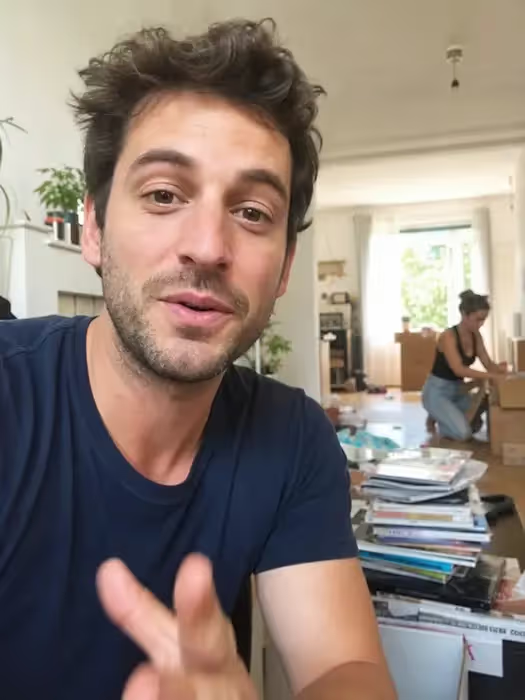
GPT Image 2 is probably the best model right now for UGC-style imagery: iPhone-shot aesthetics, product in hand, natural ambient light. Prompting for imperfections or adding cues like "iPhone photo" gives extremely realistic outputs. It you want to create AI influenceurs at scale, it’s a great opportunity.
Product shots
Upload the product, describe the scene, and GPT Image 2 produces solid hero shots with decent art direction. Lighting is more considered than what you get from most models. Where it degrades is fine material detail, Nano Banana still seems to be a better choice here.
Content policy note: ChatGPT's moderation is strict. Working on a brief for an underwear brand, every generation was blocked.
Complex-text products consistency
GPT Image 2 passed almost every text-in-image test we ran: banner ads, lookbook covers, packaging mockups, billboard composites. Where other models break down is on complexity: multi-line copy, small-print legal text, densely typeset product labels, structured ad layouts with several text zones. GPT Image 2 handles those on the first generation, which pushes the boundary of what text-in-image prompting can actually do. In practice this means a fully composed static ad, no Photoshop pass to fix the copy.
The limitation: you can describe a font style but you can't specify a typeface.
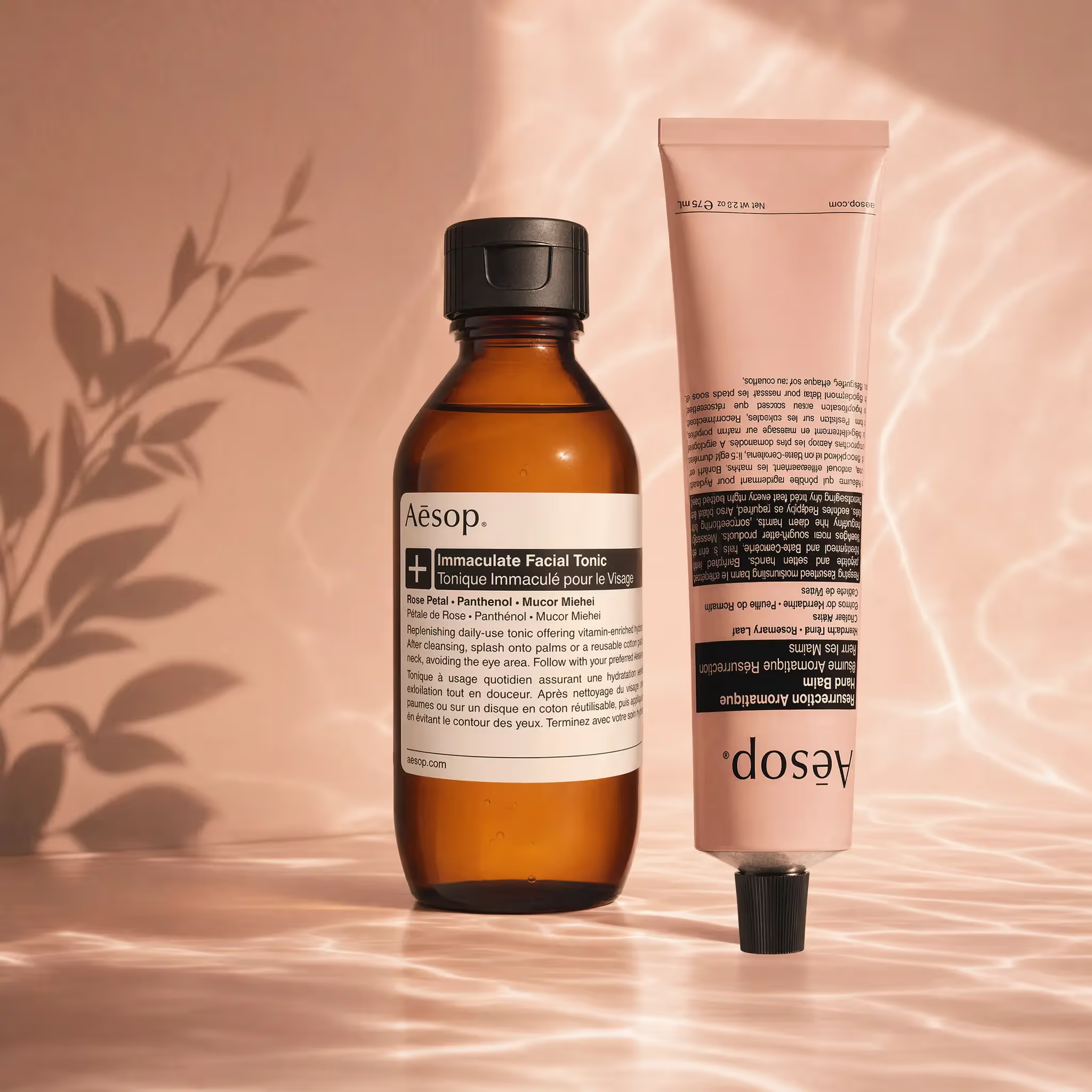
Banner ads, social graphics, and OOH composites all need readable copy. GPT Image 2 handles the visual and the text in one generation. The designer moves from building each output to reviewing them. At 50 variants per campaign, that difference is real.
Product Placement
Nano Banana 2 and Pro were already great at that, and GPT Image 2 matches their level of performance. It feels GPT Image 2 has a better sense of creative direction, the compositions just look more natural. That might be subjective. On the actual text fidelity and product recreation itself, there’s no question: all three models did very well. GPT Image 2 just feels like a more photorealistic final image.
One hard limit: ChatGPT's moderation blocks anything approaching nudity, including standard underwear and swimwear briefs. If body exposure is part of the creative, GPT Image 2 may refuse.
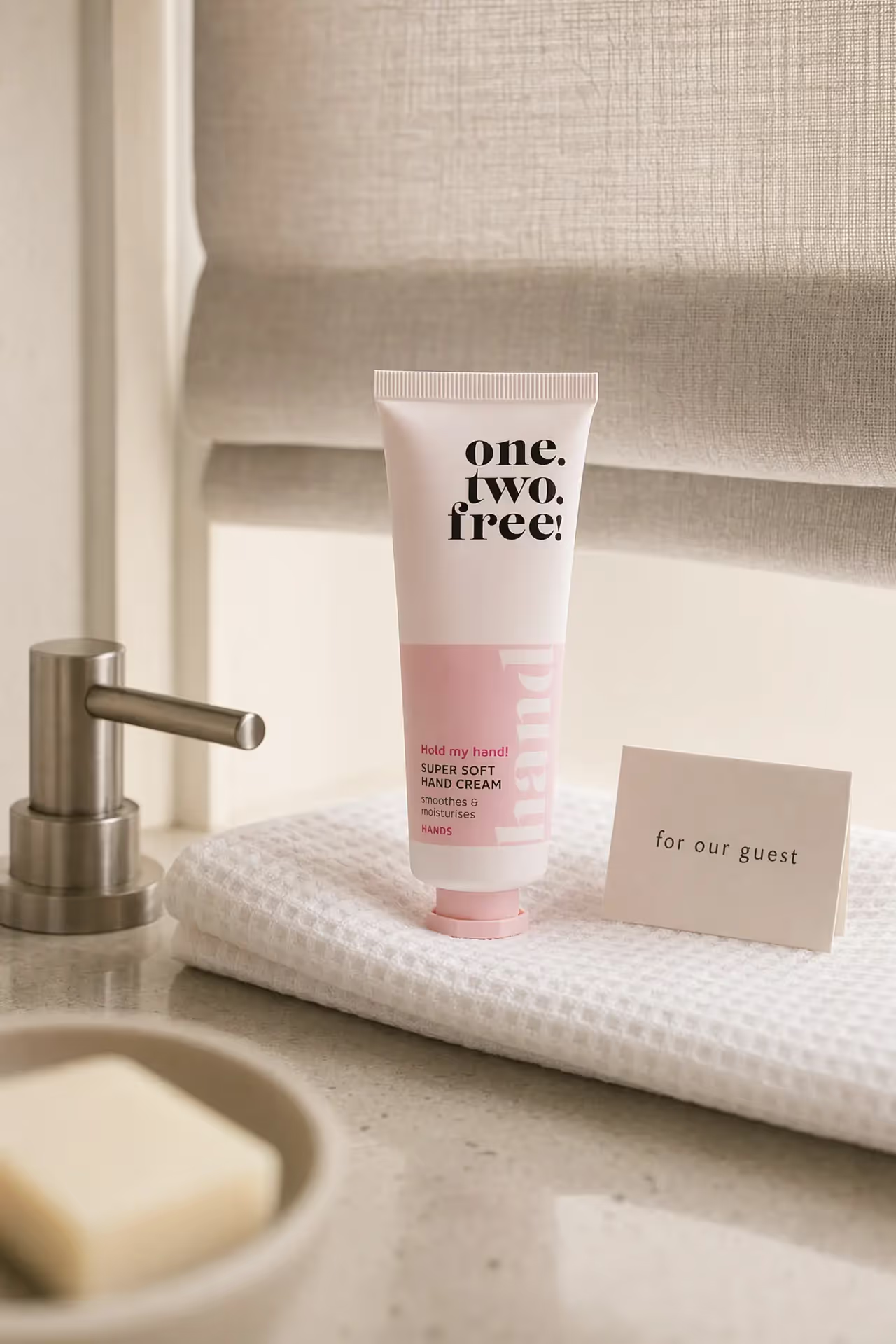
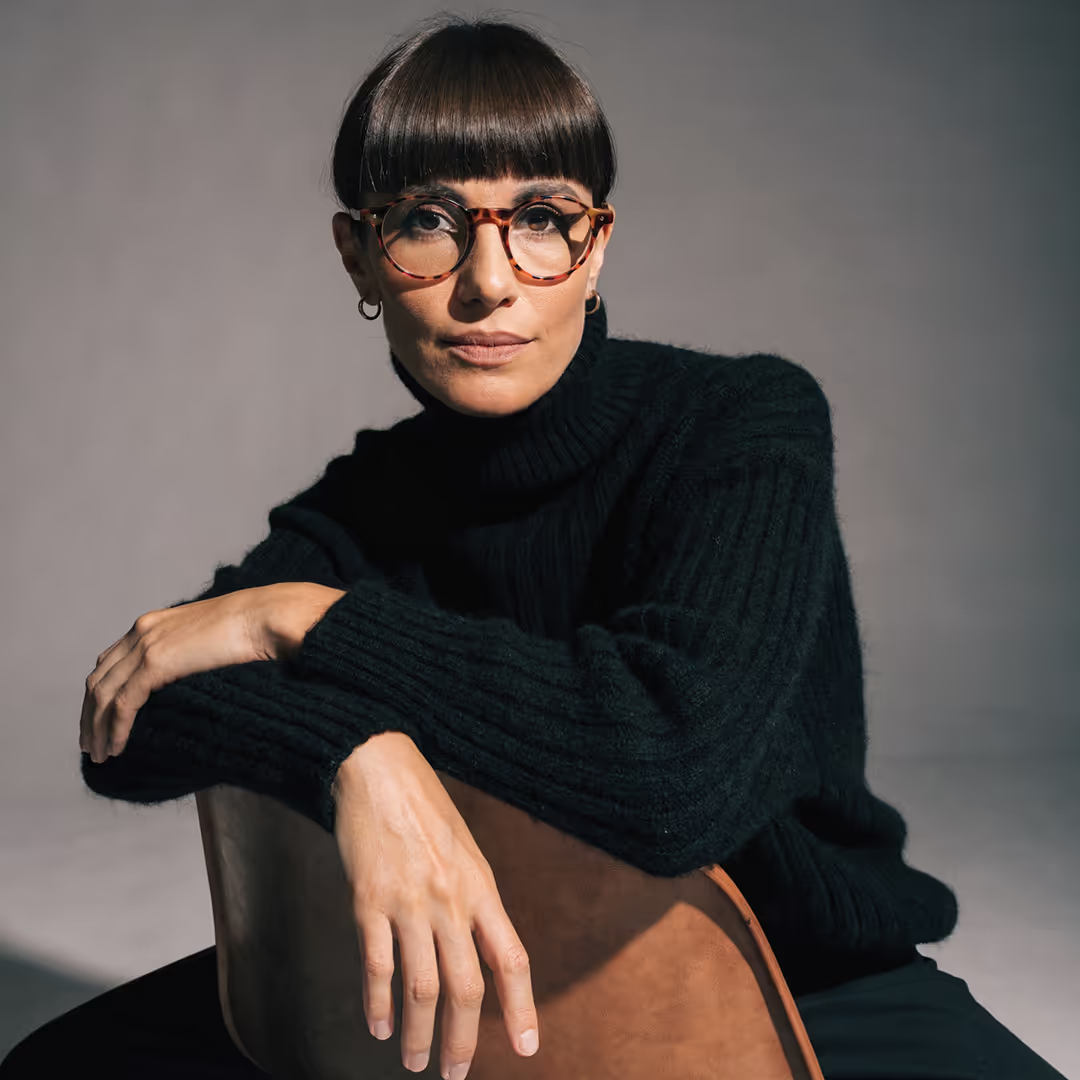
Character consistency
GPT Image 2 is on par with Nano Banana models for character consistency and gives very consistent results.
Website mockups
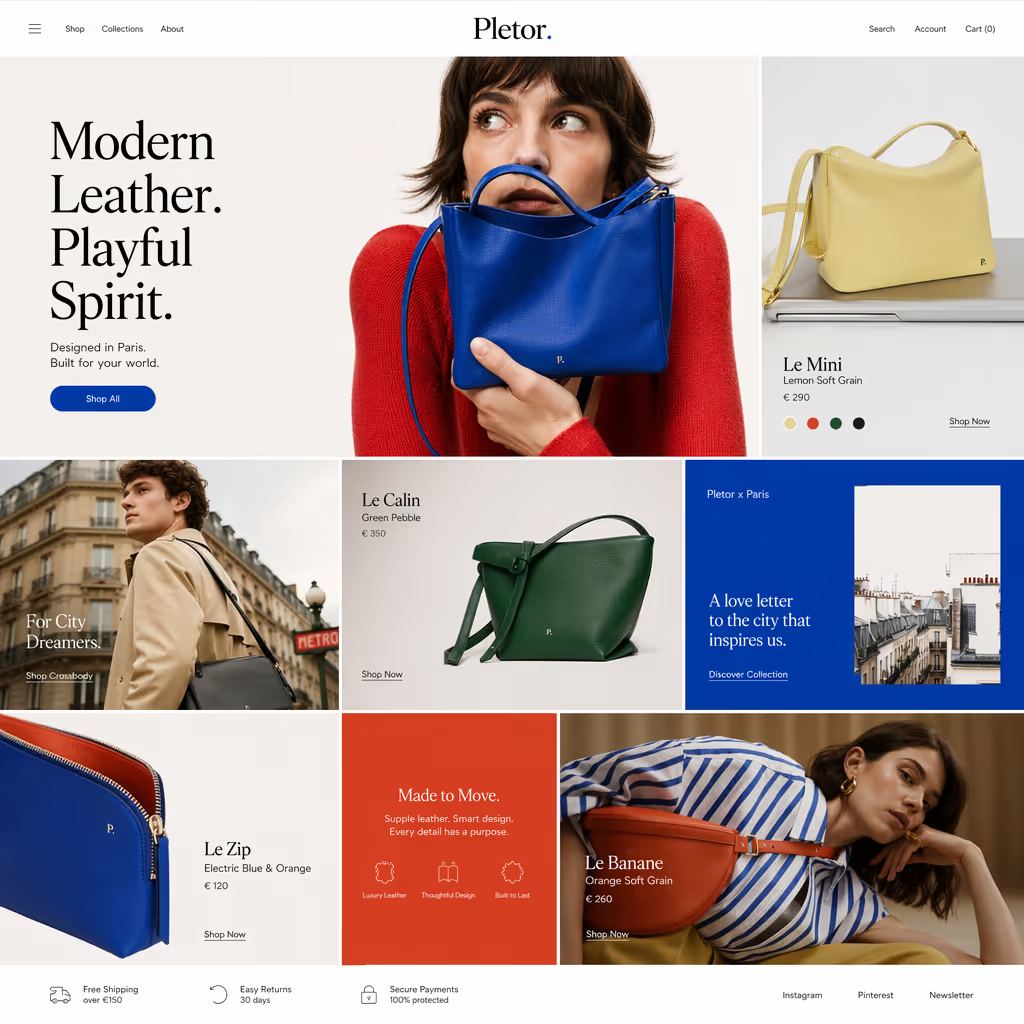
GPT Image 2 generates readable UI mockups: navigation labels, button copy, placeholder content all come out accurately enough to communicate layout and hierarchy. This is not a Figma replacement. What it replaces is the earliest stage of design communication: the rough sketch you make to align a stakeholder before any design work starts. Also works well for landing page hero mockups and PRD illustration.
Where Nano Banana is still better
- Resizing and outpainting: GPT Image 2 tends to introduce elements that weren't in the original when extending an image. Nano Banana 2 is more conservative and more predictable here.
- Product and garment fidelity: for fine material detail, fabric texture, and garment swaps, Nano Banana still leads.
- Content policy: ChatGPT blocks nudity outright, including underwear and swimwear. Not a prompting problem, it's a fixed policy. For brands running body-adjacent commercial work, GPT Image 2 is not a viable primary model.
- Precise edits: targeting a specific element without disturbing the rest of the image is more reliable in Nano Banana.
- Speed and cost: GPT Image 2 is at least twice as slow as Nano Banana models and more expensive per generation. For high-volume production runs, that gap matters. Use it where the quality difference justifies it, not as a default.
A few things worth knowing about the model
GPT Image 2 has three quality tiers: low, medium, and high. Low is fast and cheap, and good enough for ideation and internal reviews. Medium and high are what you want for final assets, product shots, and anything requiring photorealism or precise detail. Pick based on the job, not habit.
The model generates at 4K resolution natively, with support for custom dimensions. You can specify the exact aspect ratio you need without relying on outpainting to resize after the fact.
It also has a thinking mode. When enabled, the model searches the web for context, generates multiple candidates internally, and checks its own outputs before returning a result. This slows things down further but improves accuracy on complex briefs, particularly for text-heavy or structurally precise layouts.
Test it yourself
You can try GPT Image 2 directly in Pletor with this workflow.

Ferdinand Terme
Founder & CEO @Pletor
Build your creative system.
Start free. Scale when you're ready.